What the First Frost Means for Our Garden
The dahlias fade, the firewood stacks grow, and winter begins.
Published On
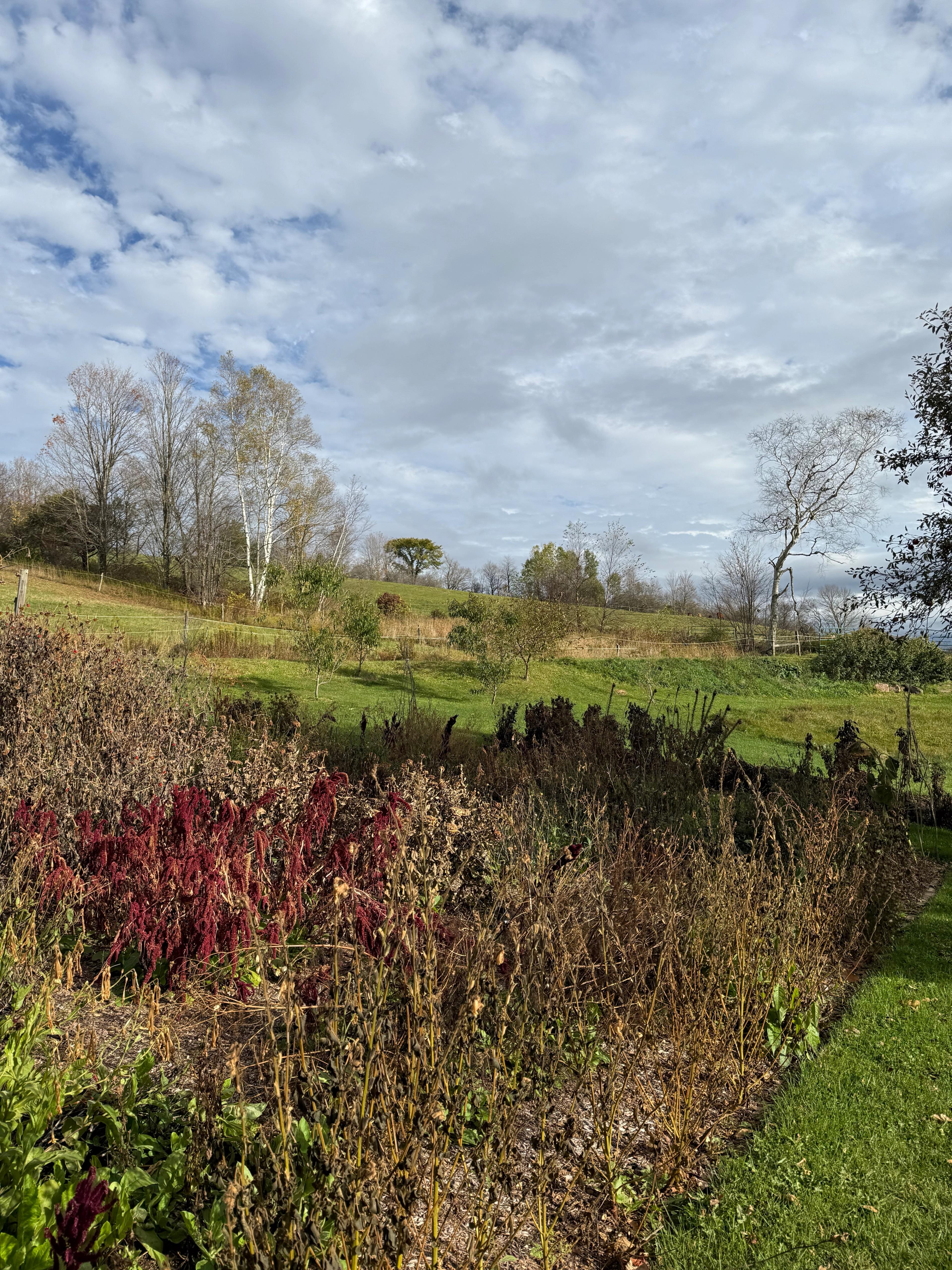
As soon as I opened my eyes I knew something was different. We sleep with the windows open year-round (yes, even when it’s freezing out) and I felt my face hit by a cold breeze and dug myself a little deeper under the blankets. When I managed to sit up in bed, I peered outside and saw the hillside covered in the first frost of the season. Truthfully, I shouldn’t have been surprised.

Photo by Alexis deBoschnek
We had been monitoring the temperatures like hawks and had covered the vegetable garden and outdoor pots in thick blankets the night before. While the grass was covered in icy crystals that glittered like diamonds, I was relieved to see our vegetables had made it without issue. The cutting garden and dahlias somehow made it through, too.

Photo by Alexis deBoschnek

Photo by Alexis deBoschnek
Featured Video
Fast forward a few weeks. My husband and I went to Virginia for a friend’s wedding, where I was surprised to see the leaves had barely started to change (ours were long gone). When we returned—heart and stomachs full (of bbq)—we were greeted with the destruction of the first real, hard frost. Most plants can withstand a light frost, but when it dips to 25 degrees at night, there’s not much you can do to prevent their unavoidable death. That sounds intense, but really all around us the plants have signaled an official shift in the season.

Photo by Alexis deBoschnek

Photo by Alexis deBoschnek
Apart from the brassicas, the vegetables in the garden all shriveled up. The cutting garden is now fifty shades of brown. There are a few rogue leaves clinging to the trees but the hillsides have traded their verdant cloaks for a quiet grey. With this unavoidable transition comes a new list of tasks for us.
- Most importantly, over the next six months we’ll spend a shocking amount of time dealing with firewood. My husband takes down trees and chops the wood himself—a hard but fulfilling job that saves a lot of money. Once split, the wood has to cure for 6-12 months, which makes this an ongoing project. We also have firewood storage inside to keep our hearth going every night in the winter
- While I love dahlias, there’s always a point after the frost when I question if the work to keep them going is really worth it. The stems need to be cut down and the tubers carefully dug up from the soil. Then, we hose them down to remove excess soil and let them dry for two days. The tubers get divided and stored in vermiculite until early spring when they get planted. We have over 100 dahlia plants, so this process takes days to complete.
- Speaking of the garden, we also have a lot of work ahead of us to clean everything up before winter. We’ll trim the roses down and cover them in mulch to protect them from the cold; annuals will get pulled out and composted, and bulbs will be planted for spring.
Until next time,
Alexis