What You Can Do to Help Amid the SNAP Benefit Freeze
Millions relying on SNAP face delayed or reduced benefits for the first time. Here’s how to help.
Published On
Photo by Rocky Luten
The Supplemental Nutrition Assistance Program (SNAP)—commonly known as “food stamps”—helps low-income individuals and families buy groceries. More than 42 million Americans rely on it every month, including 16 million children.
With the ongoing government shutdown, that lifeline is suddenly unstable.
“This isn’t a Republican or Democratic issue. This is a human issue,” says Ken Baker, Culinary Director at Rethink Food, a New York–based nonprofit that redistributes restaurant and surplus food into community meals.

Photo by Rethink Food
The Impact of the Shutdown
On October 1, the U.S. entered its first major shutdown in seven years. While not all federal functions stop during a shutdown, many slow down—and SNAP is one of them.
On November 1, millions of recipients didn’t receive their monthly benefits (this has never happened in the 65-year history of the program). Two days later, the administration announced that payments would restart—but at roughly half the normal amount and with significant delays. The partial restart is being funded through a temporary USDA contingency pool that experts say will run out quickly.
And as Baker explains, even “partial relief” doesn’t mean stability.
“Each state operates SNAP independently. With contingency funds, they might need to build entirely new systems and formulas to distribute those reduced benefits—and the people who would normally do that work can’t work right now.”
Even when fully funded, the average monthly benefit of $187 per person doesn’t cover the full cost of groceries. Rising prices on staples like milk, eggs, and meat have widened the gap.
“We’re not talking about premium ingredients,” Baker says. “We’re talking about the basics.”
What Rethink Food Is Seeing
Over the past week alone, Rethink has seen a 300% increase in demand across the community partners they serve—food pantries, distribution hubs, and community fridges. Many of the people affected are children, seniors, and multigenerational families. And contrary to popular belief, most recipients are full-time working individuals.
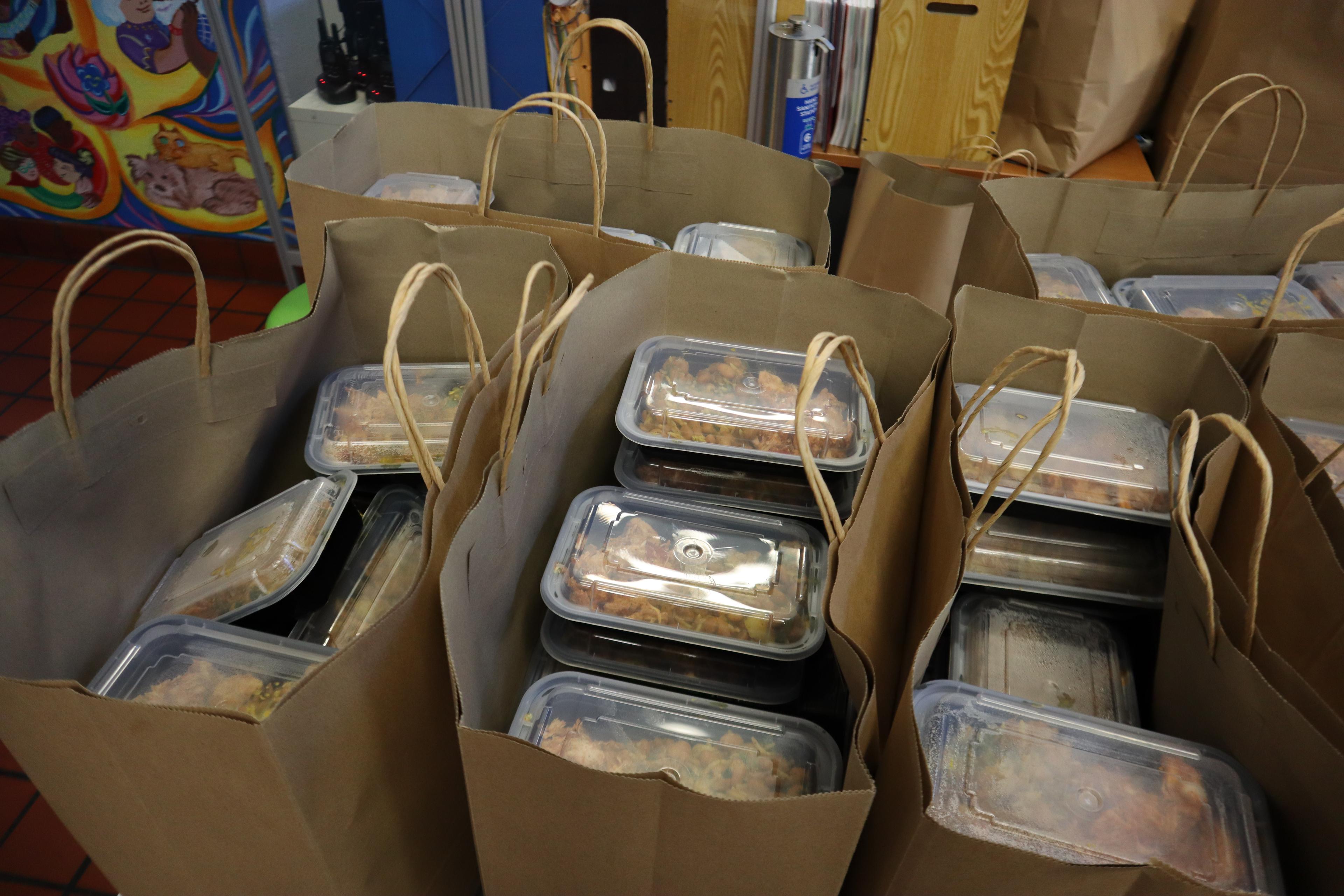
Photo by Rethink Food

Photo by Rethink Food
Featured Video
“These pauses in support can trigger a crisis. They can set families back for years—even generations.”
And even if the shutdown ends quickly, the effects won’t disappear overnight.
“When the faucet turns back on, there’s still repairing, rebuilding, nurturing to do.”
What SNAP Covers
SNAP benefits are loaded onto an EBT (Electronic Benefits Transfer) card that works like a debit card at grocery stores, supermarkets, and authorized retailers. The funds can be used for:
- Fruits + vegetables
- Meat, poultry, fish
- Dairy
- Bread + cereals
- Non-alcoholic beverages + snacks
- Seeds and plants that produce food
They cannot be used for alcohol, cigarettes, or household goods.
How to Support Those Affected
Beyond donating to a food bank, Baker emphasizes thoughtful support.
“Donate with intention, not just for an Instagram flex. Allow people choice, allow them dignity.”
Ways to help include:
1. Support organizations that already have community trust.
Support organizations with established community trust. Groups that are already embedded in communities know where help is most needed and can distribute resources efficiently. Examples include:
- Local food banks (find yours via Feeding America’s locator)
- Community fridges
- Mutual aid groups

Photo by Rethink Food
Photo by Clay Williams for Rethink Food
2. Think beyond food.
“Try to think in ways in which you can amplify the effects of services,” Baker says. For example, many distribution sites require waiting outdoors for hours, especially as winter approaches. Donating jackets, socks, blankets, or hand warmers can help meet these needs.
3. Make the experience welcoming.
Community food services should feel supportive and accessible. Baker emphasizes that gatherings shouldn’t feel transactional. Think about how to make the services more joyful and high-quality.
4. Remove barriers.
Organizations providing services should try to minimize obstacles in the first place. Eliminating qualifiers, questions, and proof can be huge.
5. Offer time and logistic support.
If you can’t donate money, donating time is always helpful. With organizations expanding drop sites and distribution hubs, volunteers are needed to help run operations. Many of those staffing these efforts are volunteers themselves.
Ideas For Where to Give
- Feeding America — find their local food bank locator here.
- FoodFinder — real-time map of food resources
- Community Fridges — a nationwide network of 24/7 community refrigerators, stocked and maintained by volunteers. Freegde has a location finder here.
- National Celiac Association — focuses on providing gluten-free groceries and meals to those in need
- Support + Feed — focuses on providing plant-based meals to those in need
- Meals on Wheels — meals for seniors affected by benefit freezes
In NYC
If you know of a mutual aid group, pantry, or fridge in your area that’s responding to the shutdown, send it in to us here.